Reverse Mortgage Loans in New York
By Steven Parangi | Updated: May 24, 2026
- ✓ Available to New York homeowners age 62+
- ✓ FHA-insured HECM and jumbo reverse options
- ✓ No monthly mortgage payments required
- ✓ NY housing counseling required
- ✓ Borrowers retain home ownership
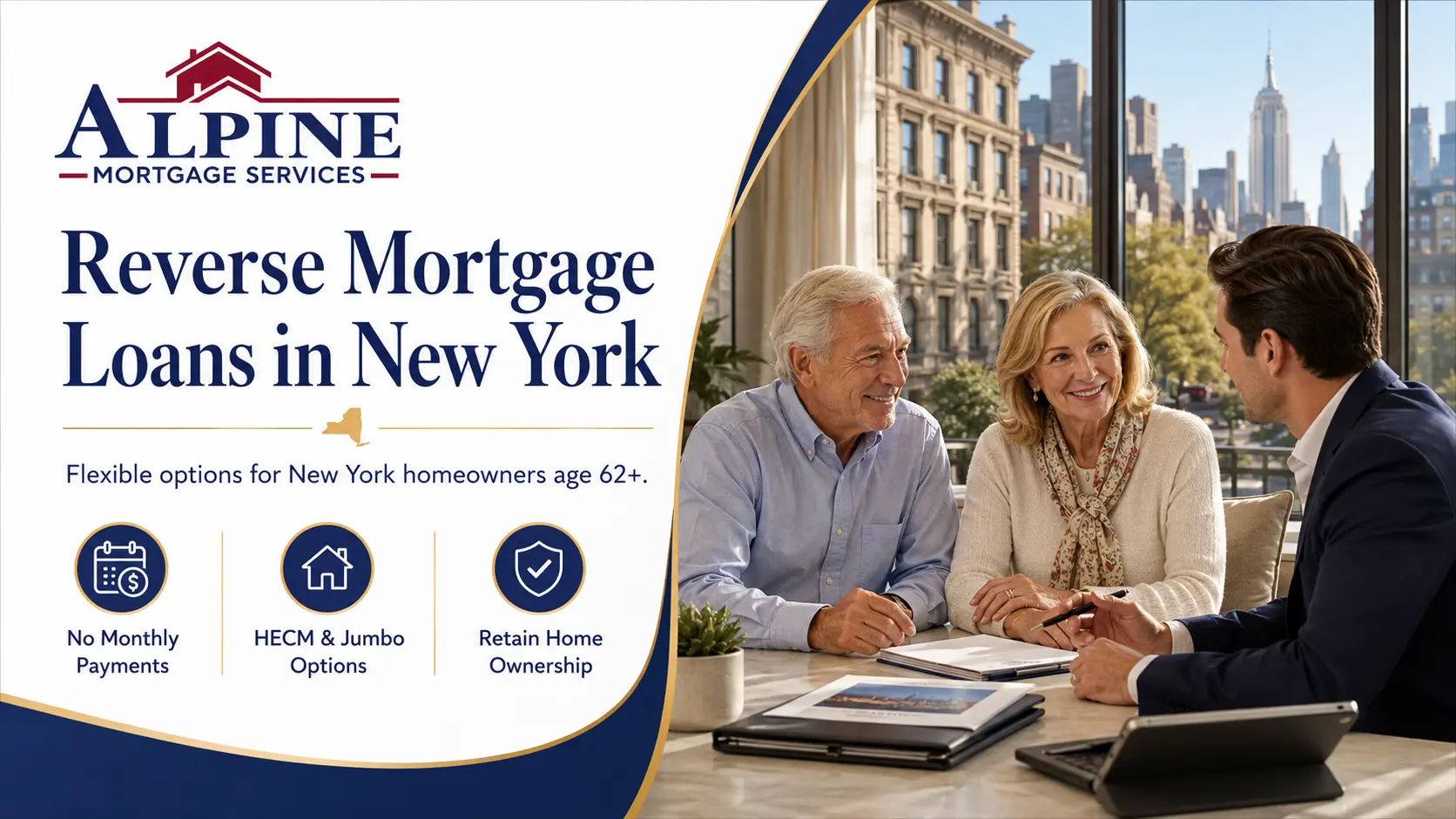
Reverse mortgages allow New York homeowners 62 and older to convert part of the equity in their homes into cash without making monthly mortgage payments. Instead, the loan is repaid when the homeowner sells the house, no longer occupies it as a primary residence, or passes away. For seniors looking to supplement retirement income, eliminate an existing mortgage payment, or access home equity for healthcare and other expenses, reverse mortgages can be a useful financial tool in New York.
What is a Reverse Mortgage?
A reverse mortgage is a loan available to homeowners 62 years of age or older. The most common type is the Home Equity Conversion Mortgage (HECM), insured by the Federal Housing Administration (FHA). Unlike a traditional mortgage where the homeowner makes monthly payments to the lender, with a reverse mortgage the lender makes payments to the homeowner. The homeowner doesn't repay the loan until the home is sold, the homeowner no longer occupies it as a primary residence or passes away.
How Does a Reverse Mortgage Work in New York?
A reverse mortgage allows homeowners to borrow against the equity in their home. Equity is the difference between the current market value of the home and the amount owed on any existing mortgages. Homeowners can receive the loan proceeds in several ways:
Lump Sum
All available proceeds paid at closing as a single lump sum payment. Best for paying off an existing mortgage or funding specific upfront needs.
Monthly Annuity
Regular monthly payments that continue as long as the homeowner lives in the home as a primary residence. Provides longevity protection.
Line of Credit
Access funds as needed with unused credit growing over time at the note rate plus 0.5% MIP. Powerful for long term retirement planning.
Combination
Any combination of the above such as a lump sum to pay off existing debt plus a line of credit for future needs.
New York Reverse Mortgage Eligibility Requirements
To qualify for a reverse mortgage in New York, homeowners must meet the following criteria:
Age Requirement
All borrowers must be at least 62 years old for a HECM. Some proprietary jumbo programs accept borrowers under 62. The older the youngest borrower the more proceeds available.
Primary Residence
The home must be your primary residence. Vacation homes, second homes and investment properties are not eligible for HECM reverse mortgages.
Eligible Property Types
Single family homes, 2-4 unit multi-family homes (with one unit owner occupied), townhouses, FHA approved condominiums and cooperatives.
Financial Assessment
Borrowers undergo a financial assessment to verify they can meet ongoing property tax, insurance and maintenance obligations. There's no minimum credit score requirement.
HUD Counseling
Mandatory counseling session with a HUD approved counselor before applying. Counseling fees typically range from $125 to $250 and may be waived for low income borrowers.
Sufficient Equity
You must own the home outright or have significant equity. Any existing mortgage must be paid off at closing using reverse mortgage proceeds, requiring enough equity to cover the payoff plus closing costs.
Co-op Reverse Mortgages in New York
While cooperative apartments are NOT eligible for FHA insured HECM reverse mortgages, Alpine Mortgage offers proprietary reverse mortgage programs that Do allow co-op units. This is an advantage for NYC co-op owners since most lenders cannot offer reverse mortgages on co-ops.
Alpine's proprietary co-op reverse mortgage program:
- Available to New York co-op owners 62 and older
- No monthly mortgage payments required
- Flexible disbursement options (lump sum, monthly payments, or combination)
- Requires board approval from the co-op corporation
- Subject to specific building eligibility criteria (financial health of building, owner occupancy percentages)
- Terms, fees and qualification criteria differ from HECMs
If you're a New York co-op owner interested in a reverse mortgage, contact Alpine to discuss your specific co-op building and personal situation. Not every co-op qualifies and the program approval process is different from a standard HECM.
Types of Reverse Mortgages Available in New York
HECM (Home Equity Conversion Mortgage)
The most common type, insured by FHA with specific eligibility requirements and federal regulations. The 2026 HECM lending limit in New York is $1,249,125, applicable to all NY counties. HECMs have no income limitations and require HUD counseling before application. Non-recourse protection means you'll never owe more than the home is worth.
Proprietary (Jumbo) Reverse Mortgage
Private reverse mortgages not insured by FHA, often used for higher value New York homes above the HECM limit. May offer larger loan amounts than HECMs and may have different age requirements. Particularly relevant for high value properties in Manhattan, Westchester, Long Island and other high end New York markets.
HECM for Purchase (H4P)
A specialized program that lets you purchase a new primary residence with no monthly mortgage payment. Combine a substantial down payment from the sale of your existing home with HECM proceeds to acquire your retirement home. Useful for relocating, downsizing or moving closer to family.
Proprietary Co-op Reverse Mortgage
Alpine offers proprietary reverse mortgages that work with co-op units which are otherwise ineligible for HECMs. This is a significant advantage for New York City co-op owners since most lenders cannot offer reverse mortgages on co-ops. Subject to co-op board approval and building eligibility criteria.
Reverse Mortgage Counseling in New York
Prospective New York reverse mortgage borrowers must participate in a counseling session with a HUD approved counselor before applying. This session is designed to help borrowers understand the financial implications of a reverse mortgage and explore alternatives.
Specific counseling objectives include:
- Educating clients about reverse mortgage features, costs and obligations
- Discussing your financial situation and goals
- Reviewing alternatives to a reverse mortgage
- Discussing impact on estate and heirs
- Reviewing residency requirements and ongoing obligations
- Warning about reverse mortgage fraud and elder abuse
Counseling fees typically range from $125 to $250 and are paid directly to the counseling agency, not the lender. HUD allows fee waivers for homeowners below 200% of the federal poverty level. Upon successful completion, you receive a HECM Counseling Certificate required to proceed with the application.
Reverse Mortgage Costs and Fees in New York
Reverse mortgages come with several upfront and ongoing costs:
Upfront Costs
UFMIP (HECM): 2.0% of the maximum claim amount
Origination Fee: Capped at $6,000 on HECM
Third-Party Costs: Appraisal, title insurance, recording, and other standard closing costs
HUD Counseling: $125-$250
Ongoing Costs
Annual MIP (HECM): 0.5% of outstanding balance
Servicing Fee: Typically $30-$35/month, sometimes waived
Interest: Accrues on outstanding loan balance
Property Charges: Taxes, insurance, HOA fees, maintenance (paid by borrower)
Most upfront costs can be rolled into the loan rather than paid out of pocket. These costs accrue and reduce remaining equity over time but the HECM program includes several borrower protections:
- Non-Recourse: You or your heirs will never owe more than the home is worth when the loan becomes due. The FHA insurance covers any shortfall.
- Mandatory Counseling: HUD approved counseling ensures you understand the loan before applying.
- Right of Rescission: After closing you have 3 business days to cancel the loan with no penalty if you change your mind.
New York Property Taxes and Insurance
With a reverse mortgage, you remain responsible for property taxes, homeowners insurance, homeowners association (HOA) fees, and home maintenance throughout the loan. Failure to keep up with these obligations can trigger a loan default. This is important in New York where property taxes are notably high.
According to the U.S. Census Bureau, the average annual property tax paid by New York homeowners is approximately $9,000 to $10,000, depending on county. Westchester, Rockland, and Nassau counties have some of the highest effective property tax rates in the entire country. Long Island towns regularly see property tax bills of $12,000 to $20,000+ on moderately valued homes. Even in less expensive upstate counties, property taxes typically exceed the national average of approximately $3,000-$4,000.
To protect borrowers, the HECM program requires a financial assessment to ensure you can afford these ongoing expenses. If there are concerns the lender may establish a Life Expectancy Set Aside (LESA) where a portion of loan proceeds reserved to pay property taxes and insurance throughout the loan.
Impact on Public Benefits
A reverse mortgage does not affect Social Security retirement benefits since social security retirement benefits aren't based on income or assets. However, needs based government benefits can be affected:
- Supplemental Security Income (SSI): Asset limits are $2,000 for individuals and $3,000 for couples. Receiving reverse mortgage proceeds as a lump sum or letting them accumulate in your bank account beyond the month received can put you over these limits.
- Medicaid: In New York, asset limits for Medicaid are higher than the federal SSI limits ($31,175 for individuals and $42,312 for couples as of 2025). Even so, reverse mortgage proceeds accumulating in your account can affect Medicaid eligibility for non-Medical needs.
- SNAP (Food Stamps): Asset limits vary; consult a benefits specialist about your specific situation.
Strategies like spending down lump sums in the month received can help preserve benefits eligibility. Consult with a benefits specialist or attorney experienced in elder law before proceeding if you receive needs based benefits.
How a Reverse Mortgage Ends in New York
A New York reverse mortgage becomes due and must be repaid when one of the following occurs:
- The last surviving borrower passes away
- All borrowers move out permanently or fail to use the home as a primary residence for over 12 months
- The home is sold or title is transferred
- The borrower fails to meet loan obligations such as paying property taxes and insurance
Moving into a nursing home or assisted living facility for over 12 months counts as a permanent move under HECM rules. This is an important consideration given that approximately 70% of people 65+ will need some form of long term care according to the U.S. Department of Health and Human Services.
Heir Options When the Loan Becomes Due
Your heirs have several options for settling the loan balance:
- Sell the home: Use proceeds to repay the loan, keeping any remaining equity
- Refinance and keep the home: Pay off the balance through a new mortgage to keep the property
- Deed in lieu of foreclosure: Transfer the home to the lender as full satisfaction of the debt (useful if the home value is less than the loan balance)
- Allow foreclosure: The lender will foreclose on the home; heirs are not personally liable due to non-recourse protection
New York has special laws around reverse mortgage foreclosures that limit lenders' remedies to just the mortgaged property, with no deficiency judgments allowed. Heirs also have specific rights during the settlement process, including the ability to purchase the home for 95% of appraised value when the loan balance exceeds the home's value.

Benefits of a New York Reverse Mortgage
Supplemental Income
Provides a steady stream of income for retirees with insufficient savings or pensions, particularly valuable in higher cost-of-living areas like New York.
No Monthly Payments
Eliminates monthly principal and interest payments, easing financial burdens. Particularly helpful for fixed income retirees facing high New York property taxes.
Flexible Disbursement
Choose how to receive funds: lump sum, monthly payments, line of credit or any combination based on your needs and goals.
Stay in Your Home
Continue living in your home while accessing equity. Critical for seniors who want to age in place rather than move to assisted living.
Non-Recourse Protection
You'll never owe more than the home's value at sale even if the loan balance exceeds the home's value. Heirs are never personally responsible for the debt.
Tax Free Proceeds
Reverse mortgage proceeds are loan funds, not taxable income. You won't pay federal income tax on the money you receive.
Drawbacks of a New York Reverse Mortgage
Costs and Fees
Reverse mortgages have higher upfront costs than HELOCs or home equity loans. While these can be rolled into the loan they reduce available proceeds and require time to recoup.
Interest Accumulation
Without monthly payments interest accrues and compounds on the loan balance increasing the overall debt over time.
Impact on Inheritance
Reduces the equity that passes to your heirs. Heirs have options when the loan becomes due but available inheritance is less than without the reverse mortgage.
Ongoing Obligations
You remain responsible for property taxes, homeowners insurance, HOA fees and maintenance. Failure to meet these can lead to foreclosure especially significant given New York's high property tax burden.
HECM Restrictions on Co-ops
FHA-insured HECMs are not available on cooperatives. However, Alpine offers proprietary reverse mortgage programs that work with co-op units, providing options for NYC co-op owners that most lenders cannot offer.
Needs Based Benefits Impact
Reverse mortgage proceeds can affect eligibility for needs based benefits like SSI and Medicaid if they accumulate in your bank account. Doesn't affect Social Security retirement.
How to Apply for a Reverse Mortgage in New York
The process of applying for a reverse mortgage in New York involves several steps:
- Consultation: Speak with a reverse mortgage specialist to understand the options available and determine if a reverse mortgage is suitable for your financial situation.
- Counseling: Participate in a mandatory counseling session with a HUD approved counselor.
- Application: Complete the reverse mortgage application with the help of your lender.
- Financial Assessment: Undergo a financial assessment to determine your ability to meet ongoing obligations.
- Appraisal: An independent appraisal of your home will be conducted to determine its current market value.
- Underwriting: The lender will review all information and decide whether to approve the loan.
- Closing: Sign the final loan documents and receive your funds based on the disbursement option you chose.
Finding the Best Reverse Mortgage Lenders in New York
Finding a reputable reverse mortgage lender is crucial. Here are some tips to help you choose the best lender:
- Research: Look for New York reverse mortgage lenders with good reputations and strong customer reviews. The Better Business Bureau (BBB) and the National Reverse Mortgage Lenders Association (NRMLA) are good resources.
- Compare Offers: Obtain quotes from multiple lenders and compare terms, fees, and interest rates.
- Ask Questions: Ensure you fully understand the terms of the loan and the responsibilities it entails. Don't hesitate to ask your lender detailed questions.
- Check Credentials: Ensure the lender is FHA-approved and has experience with reverse mortgages.

2026 Reverse Mortgage Calculator
Our 2026 Reverse Mortgage Calculator lets New York homeowners estimate potential reverse mortgage proceeds based on age, home value, existing mortgage balance, and expected interest rate. The calculator shows estimates across three payment options (lump sum, monthly annuity, and line of credit) and uses current 2026 HECM lending limits.
Reverse Mortgage Alternatives in New York
Before committing to a reverse mortgage loan consider alternative options:
- Home Equity Loan or HELOC: Borrow against home equity but require monthly payments. Lower upfront costs than reverse mortgages but ongoing payment obligation.
- Downsizing: Sell your current home and move to a smaller or less expensive property to free up cash and reduce ongoing expenses including New York's high property taxes.
- Cash Out Refinance: Refinance your existing mortgage with cash out which requires monthly payments and qualifying income.
- New York State Senior Programs: New York offers various assistance programs including STAR property tax exemptions (Enhanced STAR for seniors 65+), SCRIE (Senior Citizen Rent Increase Exemption) for rent-controlled tenants, and HEAP (Home Energy Assistance Program).
Ready to Explore a Reverse Mortgage in New York?
Alpine Mortgage specializes in reverse mortgages for New York homeowners 62 and older. With over 20 years of experience helping seniors evaluate reverse mortgages, we'll walk you through your specific situation with no pressure. We assist homeowners throughout New York, including New York City, Long Island, Westchester County, Rockland County, Nassau County, Suffolk County, and surrounding regions. Reverse mortgage guidelines are consistent statewide, though property values, taxes, and condo approval requirements may vary by county and municipality.
To learn more or to see how much you can qualify for, please contact a reverse mortgage advisor today. Our advisors are available 7 days a week to assist you. This material is not from HUD or FHA and has not been approved by HUD or a government agency.
Steven Parangi is a licensed mortgage loan originator (NMLS #76024) and attorney with over 20 years of experience in residential home lending. As the founder of Alpine Mortgage, Steven works directly with borrowers to review their mortgage options and assist them throughout the home financing process. Content published on AlpineBanker.com is reviewed regularly by Steven to reflect current lending guidelines and market conditions.
View full author profile →